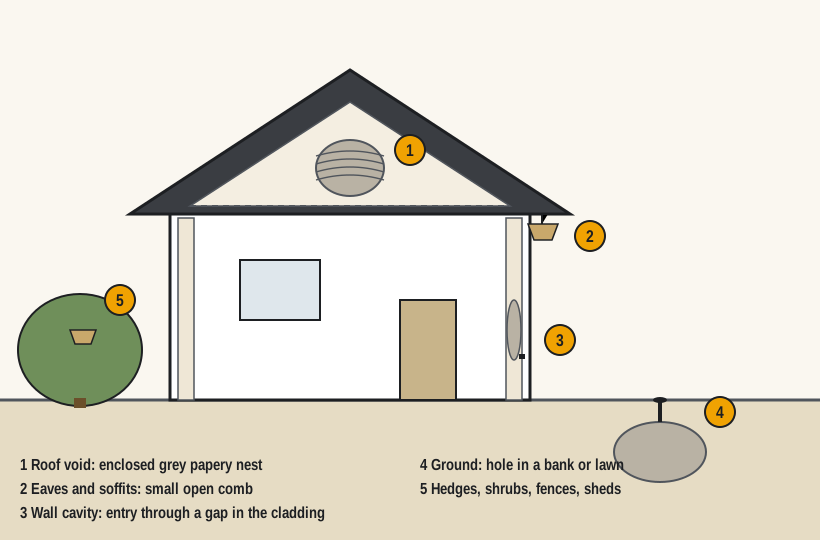
Straight answerTwo different things happen up high. Wasps flying into a gap under the roofline usually mean a German wasp nest inside the roof void, which can grow large and out of sight. A small open comb hanging from the soffit is usually paper wasps. Don't climb up to look closely, and don't go poking about in the ceiling space.
Signs of a wasp nest in the roof void
The giveaway is traffic: wasps flying steadily into one spot on the roofline, a gap in the barge board, a lifted linkcard or a vent. Some people hear a papery scratching or humming through the ceiling on warm afternoons. Wasps turning up indoors near light fittings or the manhole can mean the nest has found a way through.
- Steady stream of wasps into one gap under tiles, iron or the barge board
- Buzzing or scratching above a ceiling, loudest on warm days
- Wasps appearing inside, sometimes near downlights or the ceiling hatch
Paper wasp combs under the eaves
An open comb the size of a fist or smaller, hanging on a short stalk under the eaves or a deck, belongs to paper wasps. You can see the cells. These nests hold far fewer wasps than a German wasp nest, but they are often right beside a door or window. They can be treated and taken down in one visit, and there may be several around the house. More about paper wasps.
Why you shouldn't open the ceiling to look
Putting your head into a roof space with a wasp nest in it means being stung in a confined, dark place, often at the top of a ladder. That is a fall risk as well as a sting risk. Don't block the gap the wasps use either, until the nest has been treated. Note where they go in from outside and leave the rest to the pest controller.
How a roof nest is treated
Most roof nests are treated from outside, by putting insecticide dust into the gap the wasps use, so they carry it into the nest. That needs a ladder and sometimes roof access. If the entrance can't be reached, the pest controller may treat the nest from inside the roof space. Most colonies die within a day. See the full removal process.
Taking the dead nest out of the roof
A dead nest in a roof void is usually left where it is if it can't be reached easily. It is dry paper and the wasps are gone. If it is big, in a space you use for storage, or starting to smell from dead insects, ask for removal in the quote. Roof nests sit at the higher end of the price guide because of the access involved.
Questions people ask
Should I leave a wasp nest in the loft alone?
Leave it alone in the sense of not touching it, but don't ignore it. A German wasp nest in a roof void keeps growing until autumn, and some survive Auckland winters and get much bigger. Wasps can also find their way into the house. Have it treated while it is still small.
Can wasps get into the house from the roof?
Yes. Wasps from a roof void nest sometimes come down through gaps around downlights, the ceiling hatch or extractor fans. If you see wasps indoors regularly, keep that room closed, note where they appear, and tell the pest controller, because it can help locate the nest.
Are paper wasp nests under the eaves dangerous?
Paper wasp colonies are much smaller than German wasp colonies, but paper wasps defend their comb and can sting more than once. A comb beside a door, window or washing line is worth treating. A small comb high up and out of the way is lower risk.
Sources we checked
- Life cycle of a wasp (Manaaki Whenua Landcare Research)
- Asian paper wasp nest (Manaaki Whenua Landcare Research)
- Wasp control (Manaaki Whenua Landcare Research)
- Wasps (Department of Conservation)
Last reviewed 2026-10-06.