Straight answerA hole in the ground with wasps flying straight in and out is almost always a German or common wasp nest. These are the most common wasp nests in New Zealand and can hold thousands of wasps by late summer, all under the surface. Keep people, mowers and dogs away from it, don't pour anything down the hole, and have it treated.
How to tell it is a ground wasp nest
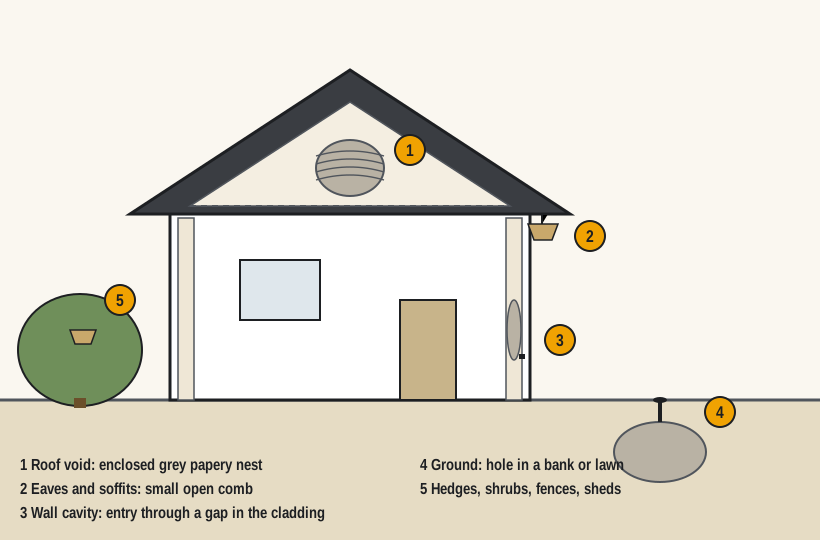
Stand well back and watch for a minute. A nest entrance has a steady traffic of wasps flying low and straight into one hole, often in a sunny bank, under a path edge, beside a retaining wall or in long grass. The hole itself may be no bigger than a coin. You rarely see the nest, because it is a papery ball in a cavity underground.
- One hole with constant two-way traffic, not wasps wandering over flowers
- Wasps that rise and circle when you mow nearby or walk past
- Bare, worn soil around the entrance
- Black and yellow wasps with legs tucked up in flight, not hairy bees
Why ground nests catch people out
Ground nests are hard to see until you are on top of them. Mowing, weed-eating or a dog digging sends vibration straight into the nest, and German wasps defend the area around it in numbers. Landcare Research notes wasps attack intruders within about 7 metres of a disturbed nest, and they can sting more than once. Children playing on lawns are most at risk.
What not to do with a ground nest
Pouring petrol, boiling water or garden chemicals down the hole is dangerous, and it brings the colony out at the person pouring. Burning risks fire and burns. Blocking the hole or flooding it brings an angry colony to the surface. Leave the entrance alone until it is treated properly.
How a ground nest is treated
This is the most straightforward nest to treat, because the entrance is at ground level. A pest controller puts insecticide dust into the entrance, usually late in the day, and returning wasps carry it into the nest. Most colonies die within a day. The dead nest is left to break down in the soil, so nothing needs digging up. Read how wasp nest removal works.
After the nest is gone
Once the wasps stop coming and going for a few days, the area is safe to mow. Check the rest of the section in late summer, because a sunny bank that suited one queen often suits another the next year. Ground nests are usually at the cheaper end of the wasp nest removal price guide.
Questions people ask
Can I mow over a wasp nest in the ground?
Not until it is treated. Mowing sends vibration into the nest and puts you within striking distance just as the wasps come out. Mark the area so nobody mows or plays near it, keep dogs away, and wait until the wasps have stopped coming and going for a few days after treatment.
What type of wasp nests in the ground in New Zealand?
German and common wasps. Landcare Research says their nests are usually underground, often in banks, though they also use hollow trees, roofs and walls. Paper wasps never nest underground; they hang open combs from plants, fences and eaves. Bumblebees nest underground too, but they are fuzzy bees, not wasps.
Will a ground wasp nest go away on its own?
Most German wasp nests die off in late autumn, but that can be months of risk away. Landcare Research says about 10% survive the winter in New Zealand and keep growing, and Auckland's mild winters suit them. A nest near lawns, paths or play areas is worth treating now.
Sources we checked
- Life cycle of a wasp (Manaaki Whenua Landcare Research)
- Wasp FAQ (Manaaki Whenua Landcare Research)
- Wasp control (Manaaki Whenua Landcare Research)
- Wasps (Department of Conservation)
Last reviewed 2026-10-06.